About the Telescope
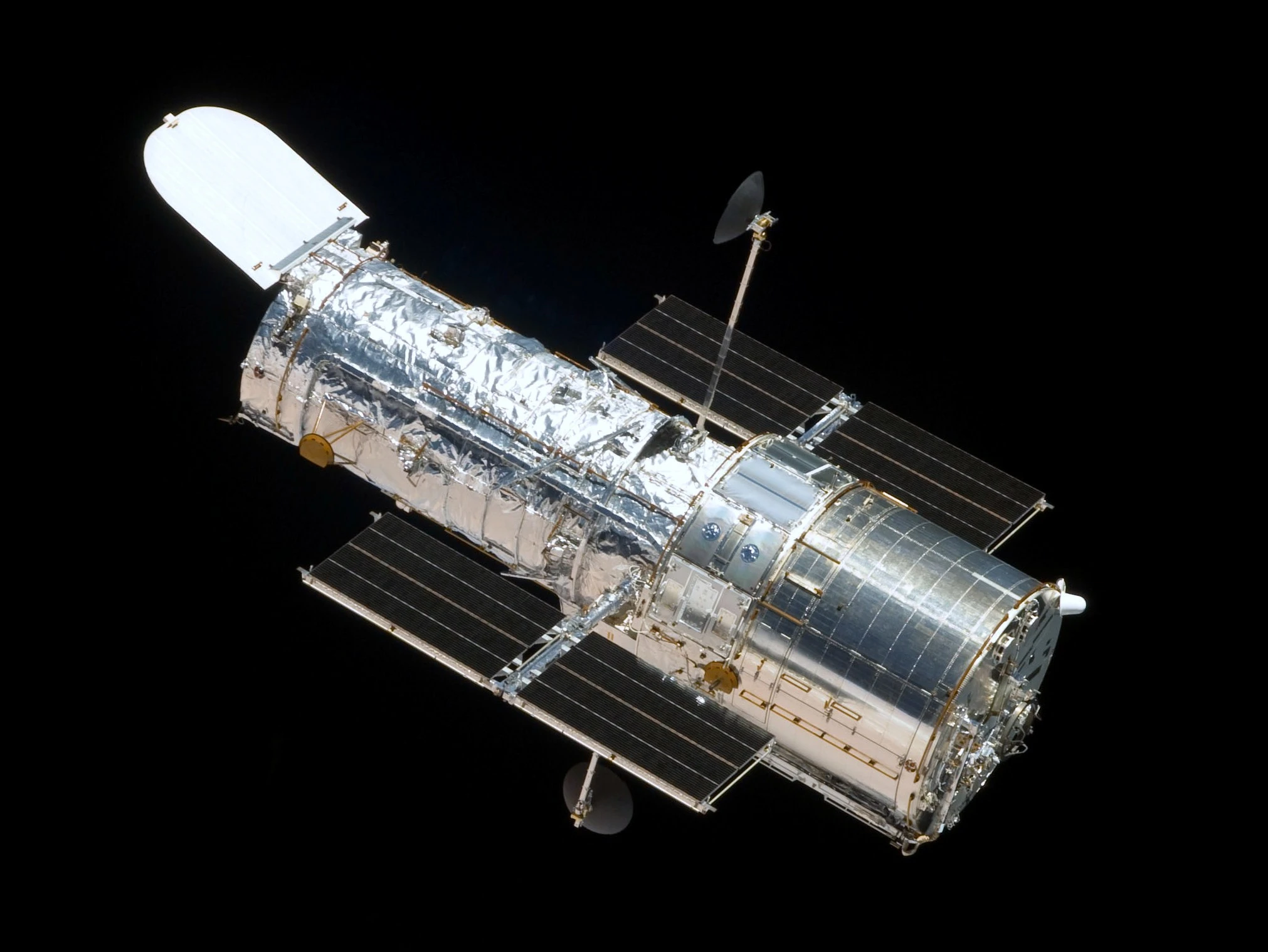
The Hubble Space Telescope (often referred to as HST or Hubble) is a space telescope that was launched into low Earth orbit in 1990 and remains in operation. It was not the first space telescope, but it is one of the largest and most versatile, renowned both as a vital research tool and as a public relations boon for astronomy. The Hubble telescope is named after astronomer Edwin Hubble and is one of NASA's Great Observatories. The Space Telescope Science Institute (STScI) selects Hubble's targets and processes the resulting data, while the Goddard Space Flight Center (GSFC) controls the spacecraft. https://en.wikipedia.org/wiki/Hubble_Space_Telescope
The Best Hubble Images
Hubble Supperbubble
In the image on the right wispy clouds of gas and a strange "superbubble"
dominate the view in this Hubble Space Telescope image. The nebula, or gas cloud, known as N44, is located in
a nearby galaxy called the Large Magellanic Cloud. In the image, you can see hydrogen gas glowing in the dark,
along with dark dust lanes and stars of all ages, in a complex structure roughly 170,000 light-years from
Earth.
.webp)
Herbig-Haro Object (HH111)
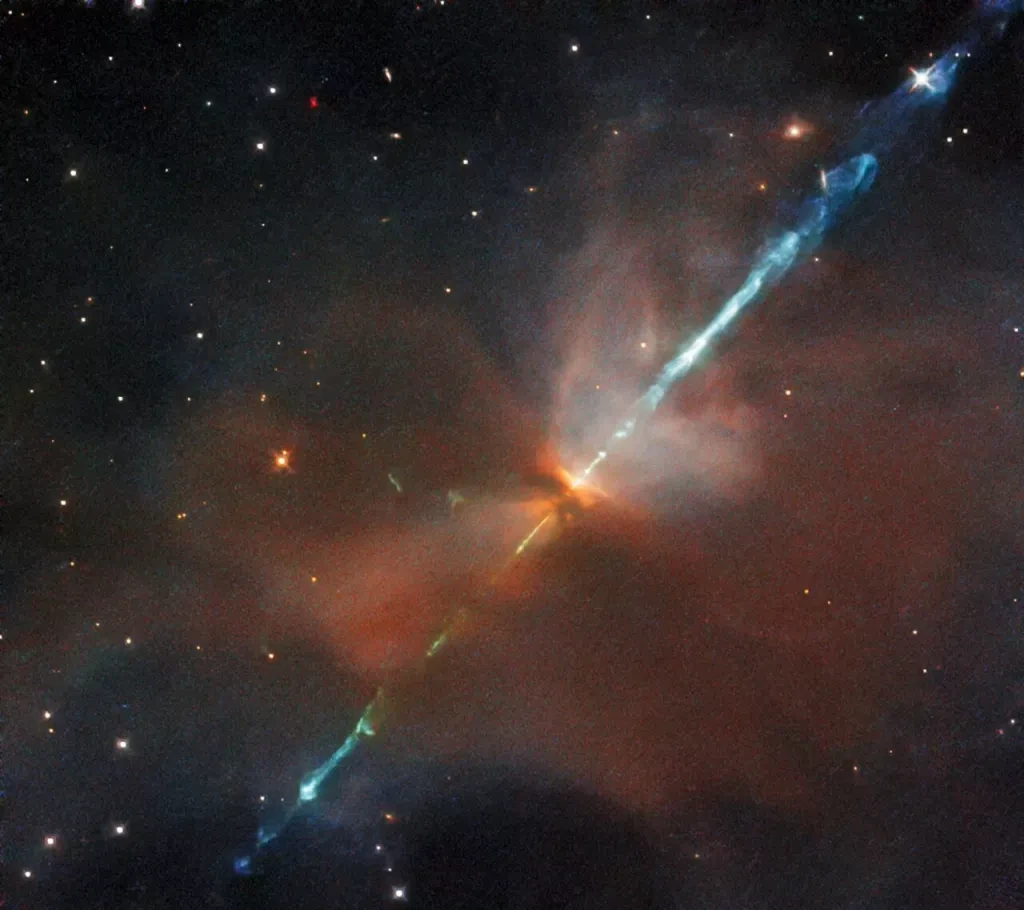
A flaming blue sword seems to pierce a giant cosmic heart in a gorgeous
new photo captured by the Hubble Space Telescope. The "sword" is composed of twin jets of superheated, ionized
gas that are rocketing into space from opposite poles of a newborn star called IRAS 05491+0247. The "heart" is
the cloud of leftover dust and gas surrounding the protostar, according to Hubble team members. This dramatic
interaction between jets and cloud creates an uncommon celestial sight known as a Herbig-Haro object. The one
photographed here by Hubble is named HH111, and it lies about 1,300 light-years from Earth, in the
constellation Orion.
Hubble Ultra Deep Field
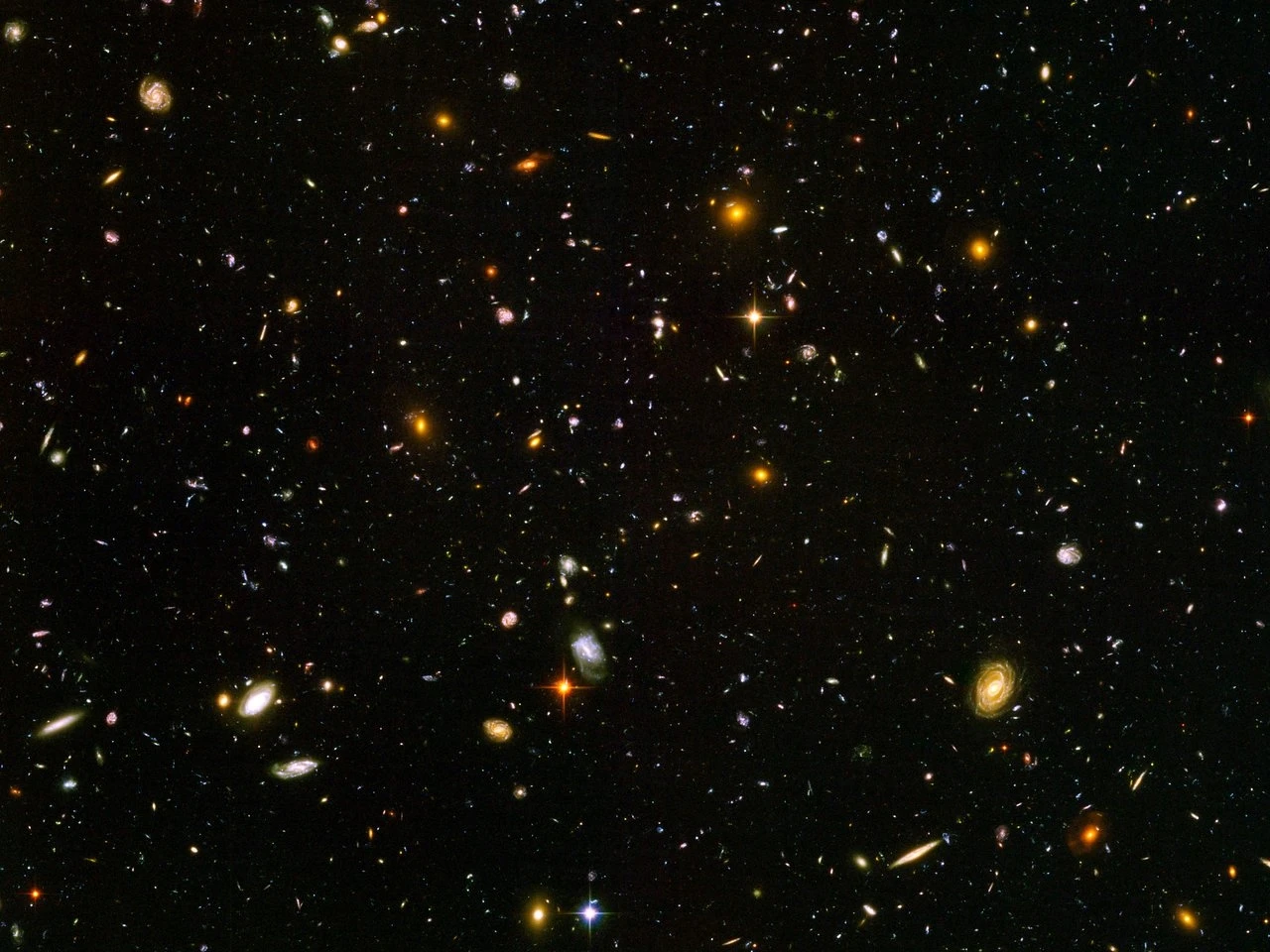
This image zooms in on a patch of the sky that contains about 10,000 galaxies that lie up to 10 billion
light-years away from Earth. Astronomers use these deep-space images to look back in time and study the
universe's origins and evolution. This version of the composite, released in 2014, is an improved version of
the original one that was released in 2003. It incorporates even more observations with more wavelengths of
light. Hubble acquired the data for these images using its Advanced Camera for Surveys and Wide Field Camera
3.
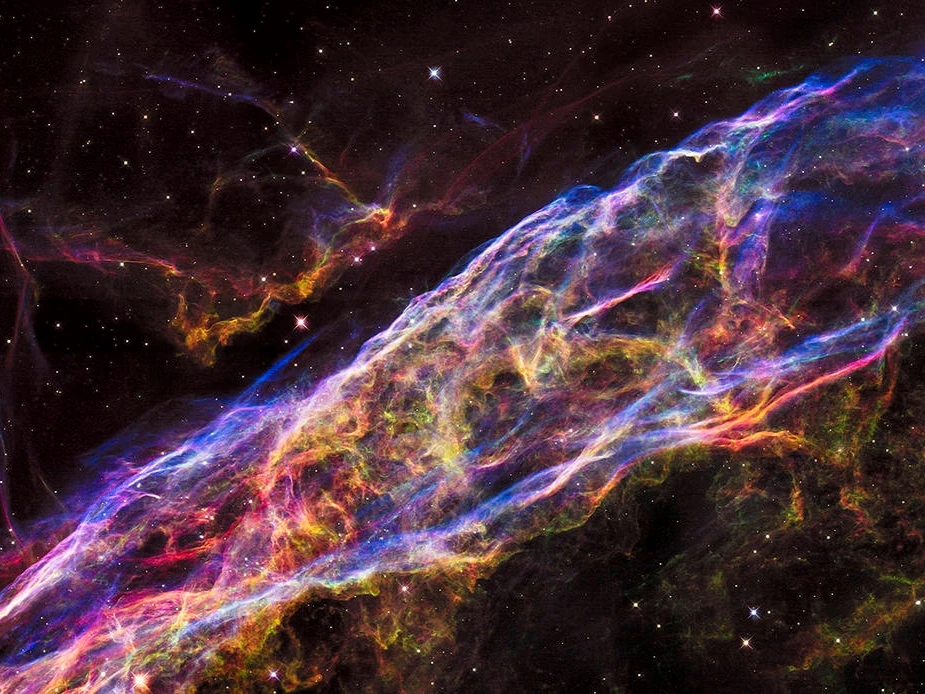
Veil Nebula
The Veil Nebula is a large supernova remnant located 2,100 light-years from Earth in
the constellation Cygnus. It's also one of the most massive and brilliant X-ray sources in the sky and
measures about 110 light-years wide. Astronomers believe the Veil Nebula was created when a star 20 times the
mass of the sun exploded around 8,000 years ago, and stellar wind from the explosion gave the cloud its shape.
Lagoon Nebula
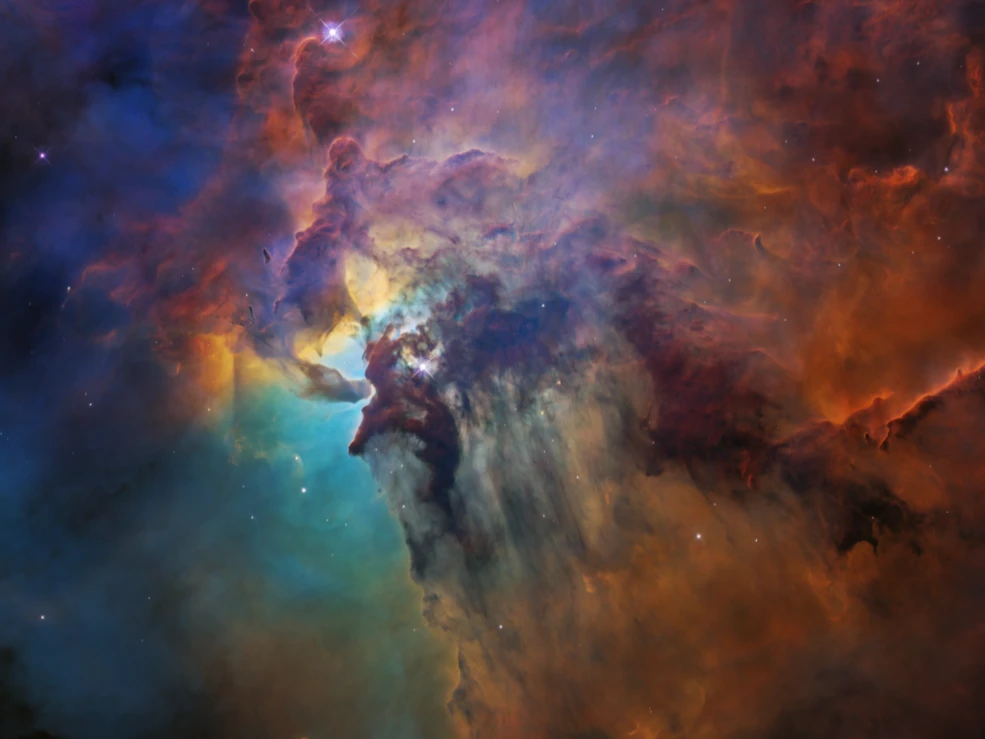
To celebrate its 28th anniversary in space, the Hubble Space Telescope took this
image of the Lagoon Nebula. The nebula, about 4,000 light-years away, is 55 light-years wide and 20
light-years tall. This image shows only a small part of this turbulent star-formation region, about 4
light-years across. The observations were taken by Hubble’s Wide Field Camera 3 between Feb. 12 and Feb 18,
2018.